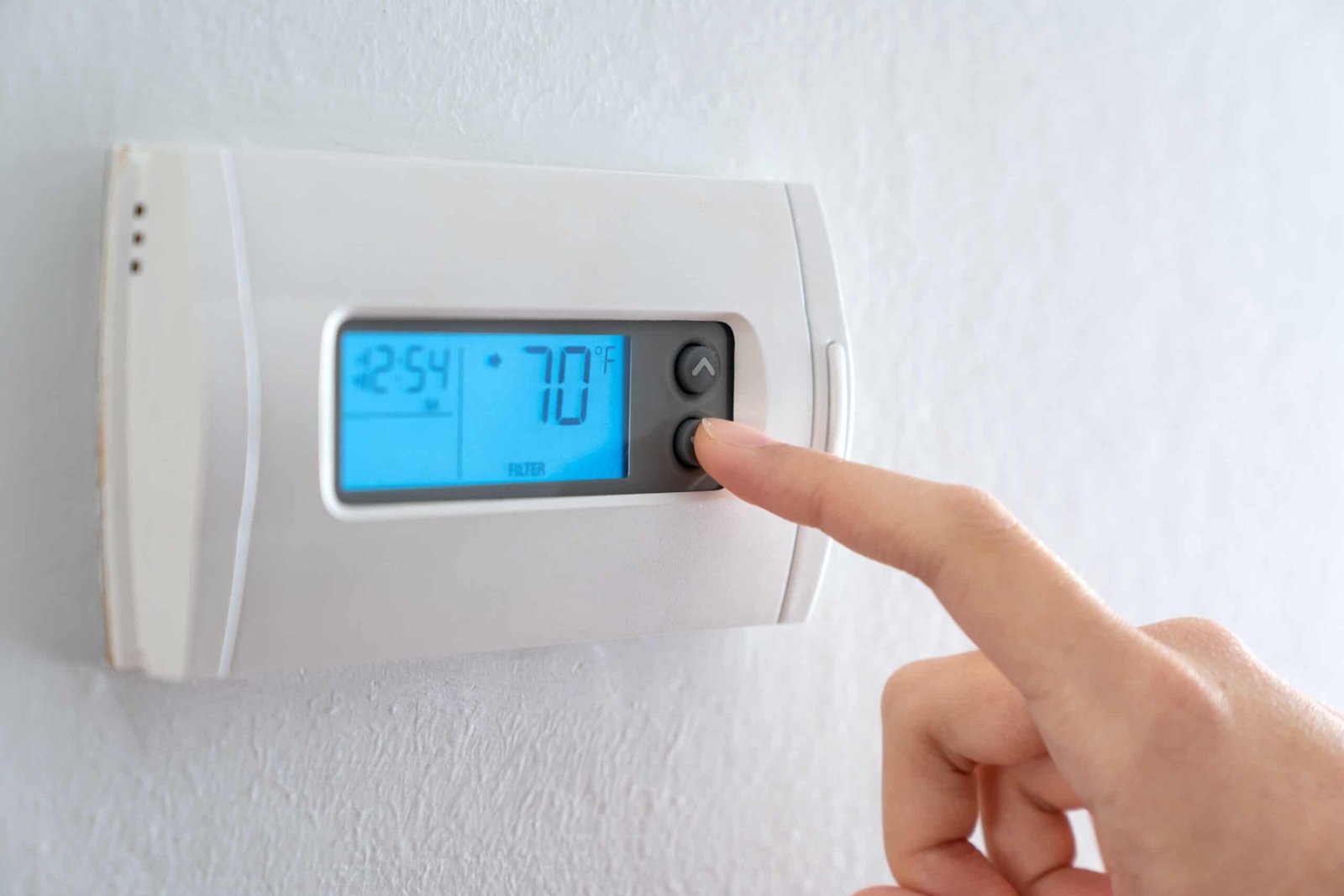
Quick Answer: A thermostat not matching room temperature usually comes down to poor placement, dead batteries, a dirty sensor, or calibration drift. A gap of one or two degrees is normal, but three degrees or more points to a real problem. Start by checking the batteries and location, and call a pro if the gap stays large or your AC runs poorly.
It is a frustrating feeling. The thermostat says 72, but the room feels much warmer or cooler than that. A thermostat not matching room temperature means your AC is basically running blind, which wastes energy and leaves you uncomfortable in the Arkansas heat. The good news is the cause is usually easy to pin down.
Below we walk through why your thermostat reads wrong, what you can check yourself, and when it is time to call a technician. If the gap will not go away, our team can track down the real cause.
How Big of a Temperature Gap Is Normal?
A small gap between your thermostat and the actual room temperature is normal. A difference of one or two degrees is nothing to worry about and happens in most homes.
A gap of three degrees or more is the sign of a real problem worth looking into. An easy way to check is to set a standalone thermometer next to your thermostat, somewhere central and away from windows or vents, and compare the two readings after an hour. If they are far apart, something is off.
What Causes a Thermostat Not Matching Room Temperature?
A thermostat not matching room temperature happens when something throws off its sensor or its connection to the system. These are the most common causes, from simplest to most serious.
- Poor placement. A thermostat in direct sun, near a lamp or TV, by a kitchen, in a draft, or on an exterior wall reads the wrong temperature for the rest of your home. The U.S. Department of Energy recommends mounting it on an interior wall, away from sunlight, drafts, and doorways, for an accurate reading.
- Dead or low batteries. Weak batteries make many thermostats act erratically or display the wrong number. This is the first thing to check.
- A dirty sensor. Dust inside the thermostat can coat the sensor and skew the reading, like trying to see through foggy glasses.
- Calibration drift. Thermostats lose accuracy over time and slowly start reading a few degrees off.
- An old thermostat. An aging unit may simply fail to read correctly and send bad information to your system.
- Loose wiring or a failing sensor. A deeper electrical issue can cause readings to jump around or stick.
What Can I Check Myself First?
Start with the simple fixes, because several of these you can handle in a few minutes with no tools.
- Replace the batteries. If your thermostat takes batteries, swap in fresh ones first. This solves the problem more often than people expect.
- Check the location. Notice whether sun, a heat source, or a draft hits the thermostat. If it sits in a bad spot, that alone can explain the wrong reading.
- Gently clean it. Pop off the cover and use a puff of canned air to clear dust from inside. Do not poke at the wiring.
- Make sure it is level. Some older thermostats need to be mounted level to read correctly.
If the batteries are fresh, the location is fine, and the gap is still three degrees or more, the cause is deeper.
When Is It Time to Call a Professional?
Call a professional when the simple checks do not fix the gap, or when the thermostat needs recalibration, rewiring, or replacement. These are not safe guesswork, since the thermostat is wired into your system.
Keep in mind your thermostat controls your whole system, so whether you need help with air conditioning or heating services, a bad reading throws off your comfort year round. There is also an important possibility to rule out: sometimes the thermostat is reading correctly and your AC is the real problem. If the room never reaches the set temperature, the issue may be low refrigerant, a dirty coil, or a failing part, not the thermostat at all. A technician can tell the difference quickly. Our team can diagnose whether you need a thermostat fix or a system repair.
Should I Just Replace My Thermostat?
If your thermostat is old, replacement is often the smart move. Newer programmable and smart thermostats read more accurately and let you set the temperature to adjust on a schedule.
That accuracy matters a lot in our climate. A thermostat that reads even a few degrees off makes your system run too much or too little, which drives up bills and wears it out faster during a long Arkansas summer. An upgrade pays for itself in comfort and efficiency, and a quick visit during regular AC maintenance can get it set up right.
Why Does an Accurate Thermostat Matter So Much Here?
An accurate thermostat matters more in Arkansas because your system works so hard for so long. When the thermostat is wrong, it either runs nonstop chasing a temperature it cannot read, or shuts off too early and leaves you uncomfortable.
Either way, our long, humid summers turn a small reading error into real money and real discomfort. Getting the thermostat right is one of the simplest ways to keep your home comfortable and your bills in check through the worst of the heat.
Get Your Comfort Back on Track
A thermostat not matching room temperature is usually a quick fix. Check the batteries and placement first, and if the gap sticks around, let a pro find out whether it is the thermostat or the system behind it.
Riverside Heating Air Plumbing is a veteran-owned team serving Fort Smith, Van Buren, Greenwood, and the surrounding River Valley. We offer 24/7 service backed by our one-year warranty. See our current offers on the specials page, or contact us today.