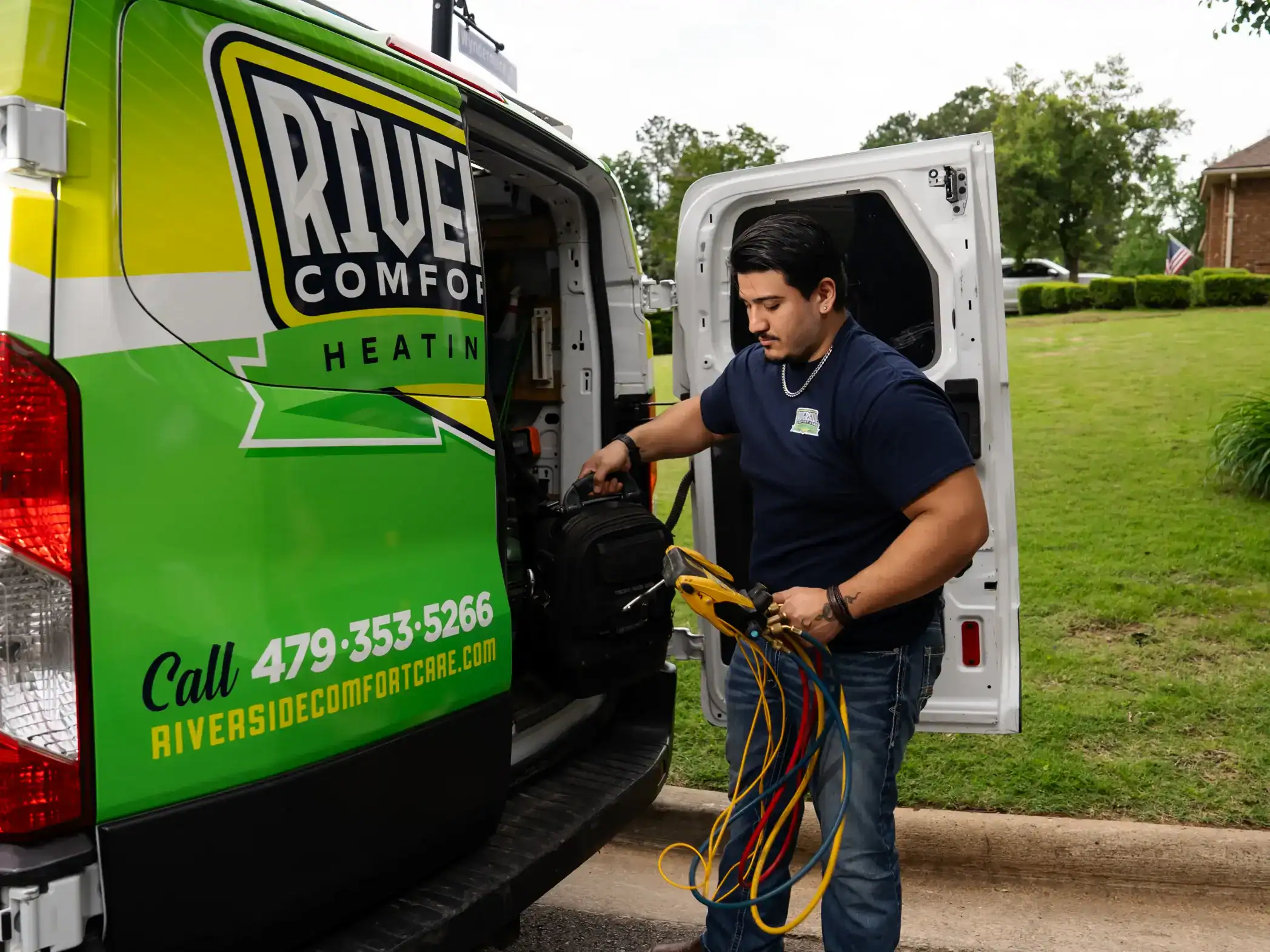
Quick Answer: Repair your AC if it is under 10 years old and the fix costs less than half the price of a new system. Lean toward replacement if your unit is older, breaks down often, or the repair is a big share of a new one. In the Arkansas heat, an aging system that struggles every summer is usually worth replacing.
Deciding between AC repair or replacement is one of the most stressful calls a homeowner makes, especially when your system quits in the middle of a Fort Smith summer. Spend too little and you keep pouring money into a dying unit. Spend too much and you replace a system that had years left. The good news is there are simple rules that take the guesswork out of it.
Below we walk through the exact way our technicians help River Valley homeowners decide. We cover the two cost rules the HVAC industry uses, how age changes the math, and the warning signs that point to replacement. When you want a straight answer, our AC repair team is here to help.
The 50% Rule: The Fastest Way to Decide
The simplest guideline is the 50% rule. If a repair costs more than half the price of a new system, replacement is usually the smarter buy. If it costs less than half, the repair is often worth it. The idea is straightforward. A repair that eats up half the cost of a brand-new unit is money sunk into a system that may not last much longer. That same money could go toward a new unit that runs for the next 15 years. The 50% rule gives you a number to anchor the decision so you are not just guessing or taking someone’s word for it. But it works best when you also factor in your system’s age, which we cover next.The $5,000 Rule: When Age Changes the Math
The $5,000 rule folds your system’s age into the decision. Multiply your AC’s age in years by the repair cost. If the result is more than 5,000, you should lean toward replacement. If it is less, a repair is usually fine. Here is how it plays out:- A 5-year-old unit with a $400 repair = 2,000. Repair it.
- A 10-year-old unit with a $400 repair = 4,000. A repair still makes sense.
- A 12-year-old unit with a $500 repair = 6,000. Lean toward replacement.
How Old Is Too Old for an AC?
Most central air conditioners last about 15 to 20 years, according to the U.S. Department of Energy. In our Arkansas climate, that lifespan often runs on the shorter end because the system works so hard through long, humid summers. Once your AC passes the 10-year mark, replacement deserves a serious look, even if it still runs. Older units lose efficiency, break down more often, and cost more to operate every year. A system that is 15 years or older usually has only a season or two left, no matter how good the last repair was.What Signs Point to Replacement Instead of Repair?
Beyond the cost rules, a few clear signs tell you a replacement is the better move. Watch for these:- Frequent breakdowns. If you have called for repairs two or three times in the last couple of summers, the repairs are adding up to more than a new system would cost over time.
- Rising energy bills. An aging AC loses efficiency and pulls more power to do the same job, which shows up on your monthly bill.
- Uses R-22 refrigerant. Older systems run on R-22, which has been phased out and is now very expensive. A refrigerant repair on an R-22 unit can cost more than the system is worth.
- Some rooms never get cool. A system that can no longer keep up with the Arkansas heat is telling you it is worn out.
- It is past 10 to 12 years old. Age alone tips the scale toward replacement once the other signs appear.