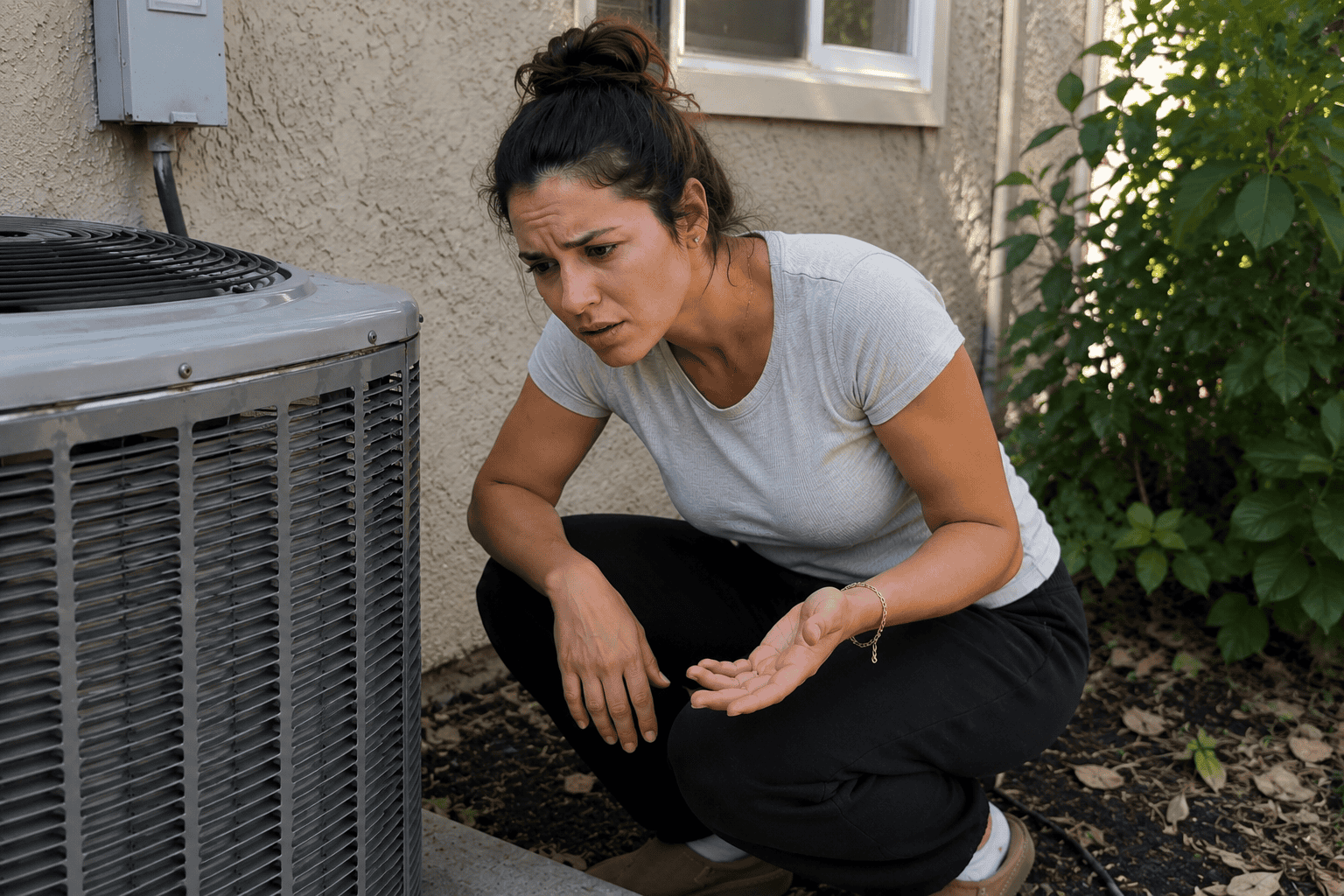
Your AC is so loud most often because a part has come loose, a fan is hitting something, or an electrical component is starting to fail. The exact sound tells you a lot. A rattle points to loose hardware, a buzz points to electrical trouble, and a loud bang or grinding means you should shut the system off right away.
A healthy air conditioner makes a steady, low hum and the soft whoosh of air through the vents. You stop noticing it. When a new sound shows up, or an old one gets louder, your AC is telling you something has changed. This guide walks through the most common AC noises by type, what each one usually means, and which ones are an emergency.
What Sounds Are Normal for an AC?
Some noise is part of normal operation, so it helps to know the baseline before you worry. A gentle hum from the outdoor unit, a quiet click when the system starts or stops, and the steady whoosh of air from your vents are all expected. A short whir as the fan spins up is fine too.
The trouble signs are sounds that are new, sudden, loud enough to hear over a conversation, or harsh in tone. Screeching, banging, grinding, and hissing are never part of normal operation. If the sound makes you stop and look at the unit, it is worth tracing. The sections below sort the common ones by what they usually mean.
Why Is My AC Buzzing?
A buzzing AC usually points to an electrical issue or a loose part vibrating somewhere in the system. A failing capacitor, a worn contactor, or loose wiring can all hum and buzz, and so can a fan blade that has slipped out of balance. The buzz often comes from the outdoor unit.
Electrical problems are not something to poke at yourself. According to the U.S. Department of Energy, a system that will not run should first be checked at the fuses or circuit breakers, but anything past that belongs to a trained technician. If the buzzing is steady and the unit struggles to start, shut it off at the breaker and call a pro before a small electrical fault turns into a bigger one.
Why Is My AC Rattling or Clicking?
A rattling AC is usually the mildest of the loud sounds, and it often means loose hardware or debris. Screws and bolts work loose over time from constant vibration, and twigs or leaves can get pulled into the outdoor unit. A rattle that grows over weeks means the loose part is moving more, so it is worth catching early.
Clicking has its own pattern. A single click when the system starts or stops is normal. Repeated, constant clicking while the unit runs usually points to an electrical control like a relay, or a fan blade striking something. Clear any debris you can see around the outdoor unit with the power off. If the clicking keeps up, have the controls checked.
Why Is My AC Screeching or Squealing?
A screeching or squealing AC most often comes from the fan motor or, on older units, a worn fan belt. Dry motor bearings squeal as metal rubs metal, and a loose belt slips and shrieks as the system runs. The sound usually rises as the unit works harder.
There is one version of this sound you should not wait on. A high-pitched squeal from the compressor, especially right at startup, can signal dangerous internal pressure. If the squeal seems to come from the large component in the outdoor unit rather than the fan, turn the system off and call for service. Protecting the compressor is worth a service call, because replacing one is the most expensive repair on the system.
Why Is My AC Banging or Grinding?
A banging or grinding AC is the sound that means stop. Banging usually points to a broken or loose part inside the compressor, a piston pin, a connecting rod, or an unbalanced blower hitting its housing. Grinding points to a motor whose bearings have failed. Either way, metal is moving where it should not.
Turn the system off at the thermostat the moment you hear banging or grinding, and leave it off. Running it anyway lets the loose part chew up everything around it, which turns a single repair into several. This is the clearest case for calling a professional fast. If the noise traces back to the compressor, our blog on the signs of a failing compressor walks through what comes next.
Why Is My AC Hissing or Bubbling?
A hissing or bubbling AC can point to a refrigerant leak, which is both a performance problem and a safety one. Refrigerant runs sealed through the lines under pressure, so a hiss can mean it is escaping, and a gurgling or bubbling sound can mean the same. You may notice weaker cooling at the same time.
Refrigerant has to be handled by a certified technician, so this is never a do-it-yourself fix. Turn the system off if you suspect a leak and call for service. A quieter hiss right when the system shuts down can simply be pressure equalizing inside the lines, which is normal, but a steady hiss while running is worth checking.
What Can I Do About a Noisy AC Myself?
A few safe checks can quiet a minor noise or at least narrow down the cause before you call. Stick to the simple stuff and leave electrical, refrigerant, and compressor work to a pro.
- Change a dirty filter. A clogged filter restricts airflow and can cause whistling and strain.
- Clear the outdoor unit. With the power off, rake away leaves, twigs, and debris that can rattle or clog the fan.
- Tighten a loose access panel. A buzzing or rattling panel sometimes just needs its screws snugged.
- Check the vents. Make sure furniture is not blocking registers, which can whistle under pressure.
If the noise is buzzing, banging, grinding, screeching from the compressor, or hissing, skip the DIY and call. Those point to electrical, mechanical, or refrigerant problems that need a trained eye.
When to Call a Fort Smith AC Pro
Call a professional any time you hear banging, grinding, a compressor squeal, or a steady hiss, or any time a buzz or rattle sticks around after you have cleared debris and changed the filter. Those sounds trace back to parts that fail fast when the system keeps running, and the longer it runs loud, the bigger the repair.
Our veteran-owned team serves Fort Smith, Van Buren, and Greenwood, and we track a noise to its real source instead of guessing. We tell you straight whether it is a quick fix or something bigger. Hearing a sound that does not belong? Contact Riverside Heating Air Plumbing to schedule your AC repair today.